


Strategies & Tips for Leader-Coaches
You may be pretty familiar with the model of the external leadership coach. But what if you need to coach a subordinate or a peer within your organization?
One of the most powerful responsibilities of leadership is helping others grow. Yet many leaders hesitate when it comes to putting themselves in the role of a coach. It may feel like a challenging task to coach a colleague or direct report, and you may wonder: What do I ask? How do I guide without simply giving advice?
That’s where a proven coaching framework and knowing some key coaching principles for leaders can help.
At CCL, we know from experience that coaching doesn’t have to be complicated. With the right approach, leaders at any level can use coaching conversations to build trust, improve relationships, and strengthen performance. Our world-class executive leadership coaches use our proven coaching framework and principles to coach others.
By applying the same coaching model and tips in your own conversations, you’ll improve your skills, confidence, and impact. These are the essential coaching principles for leaders to master, and the foundational coaching model they’re built upon.
The Assessment – Challenge – Support Coaching Model: A Practical Tool
Assessment – Challenge – Support (ACS)™ is our simple, proven leadership coaching framework that provides a clear path for guiding coaching conversations. Instead of relying on a script or feeling pressured to have all the answers, ACS helps you spark self-awareness, stretch thinking, and encourage follow-through.
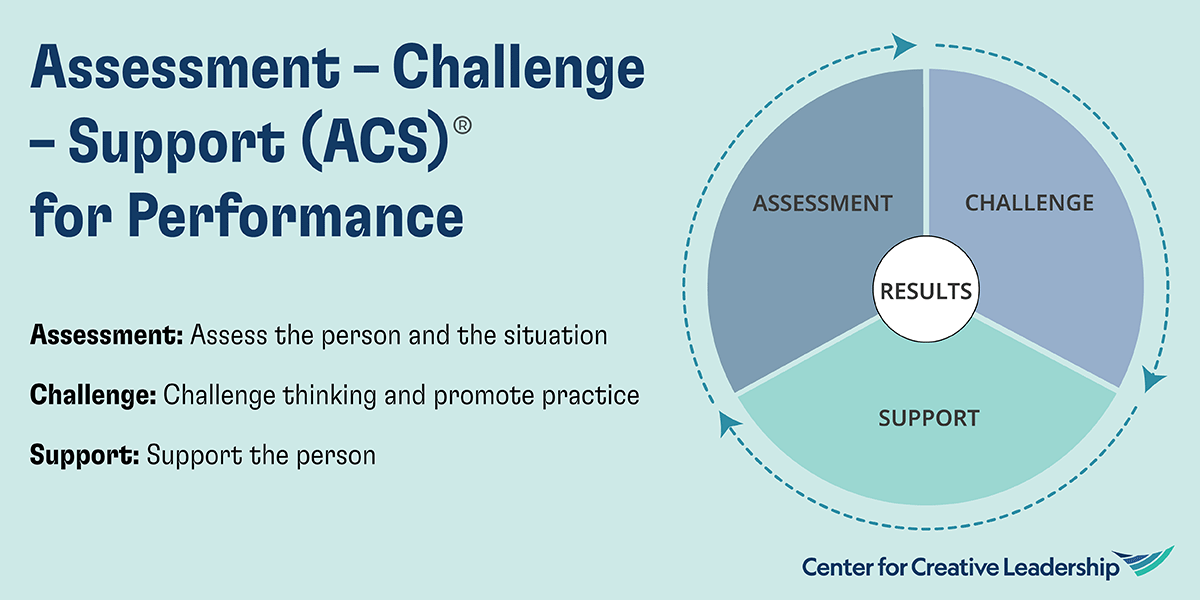
Here’s what using this coaching framework looks like in practice.
Step 1: Assess — Where Are They Now?
Every good coaching conversation begins with curiosity. The Assess phase is about understanding your coachee’s current reality and inviting them to reflect.
Rather than jumping in with solutions, you create space for them to surface their own insights. This step helps build trust and sets the stage for growth.
Sample questions you might ask:
- What’s working well for you in this situation?
- Where are you feeling stuck?
- How do you see your role in this challenge?
By encouraging them to slow down and assess, you help the other person feel heard and increase their self-awareness, and you gain a clearer picture of where to guide the coaching conversation.
Step 2: Challenge — What’s Possible?
Once you’ve listened, it’s time to stretch their thinking. A key principle of coaching is creating a safe, supportive, yet challenging environment. Challenge isn’t about criticism; it’s about encouraging people to reframe and explore new possibilities.
A well-placed challenge helps your coachee to recognize assumptions, uncover hidden biases, or consider bolder options. Often, this is where breakthrough insights happen.
You might ask:
- What assumptions might you be making here?
- What options haven’t you considered yet?
- If you weren’t afraid of failing, what would you try?
Challenge opens the door to growth and invites people to look beyond their comfort zones and step into new possibilities and different ways of thinking and acting.
Step 3: Support — What’s Next?
Coaching isn’t complete without encouragement and follow-through. The Support phase is about helping the person translate any insight into action.
Playing the role of coach, you provide accountability and reassurance, but the ownership stays with them. This is where momentum builds.
Questions to consider asking:
- What’s one action you can commit to this week?
- How can I support you as you move forward?
- Who else could help you succeed?
Support ensures the coaching conversation isn’t just talk. It becomes a catalyst for real change.
6 Core Principles of Effective Coaching for Leaders
While ACS gives you a practical model for everyday coaching conversations, effective leadership coaching is also grounded in broader foundational principles and strategies.
Whether you’re an external executive coach or a leader coaching others within your organization, what it takes to coach people is fairly similar, and these 6 coaching principles for leaders will help you succeed.
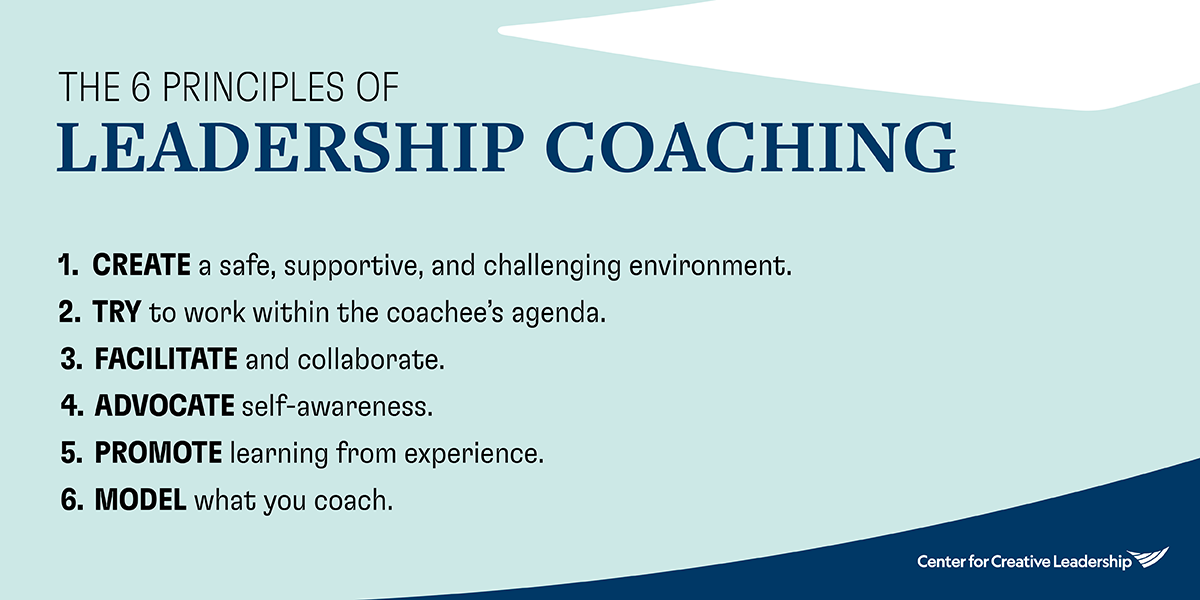
1. Create a safe and supportive, yet challenging environment.
Coaching is most effective when people feel both safe and stretched. Too much challenge without support erodes trust. Too much support without challenge leads to stagnation. Strive for balance. (ACS is built on this very foundation.)
You want to build trust and confidence, encourage honesty and candor, boost morale, and help your coachee feel psychologically safe at work. It’s up to you to create an environment where risk-taking feels rewarding, not risky, so keep your attitude as open and as nonjudgmental as possible, and let the coachee know you support and respect them, even as you test their knowledge and skills.
2. Work within the coachee’s agenda.
Coaching isn’t about your personal priorities. When holding a coaching conversation, let the coachee decide which goals to work on and even how to go about improving. If you need to address organizational needs, shift into a managerial role so that the coaching relationship remains collaborative. This is an important coaching principle that leaders should know to preserve trust and effectiveness.
3. Facilitate and collaborate.
The best coaches don’t give answers; they ask good questions. Focus on using active listening skills when coaching others. Really hear the coachee’s needs and avoid filling the lesson with your own life stories and theories. Active listening and collaboration ensure that the coachee owns their next steps. Action items rest with the coachee — with you acting as the facilitator and collaborator. Your role is to guide, not to lecture.
4. Advocate self-awareness.
You want your coachee to recognize their own strengths and weaknesses — a prerequisite skill for any good leader. In the same way, you should understand how your behaviors as a coach impact the people around you. Demonstrate a sense of awareness in yourself, and you’re more likely to foster a similar self-awareness in your coachee. You may also want to share some specific ways to boost self-awareness.
5. Promote learning from experience.
Most people can learn, grow, and change only if they have the right set of experiences and are open to learning from them. As a coach, you can help your coachee reflect on past events and analyze what went well (and what didn’t). Foster experiential learning and using experience to fuel development, and your coachee will continue to improve long after the end of your lessons.
6. Model what you coach.
Be a leader yourself.
This, the last of the 6 principles of coaching for leaders, may be the most difficult to embody — as it means putting into practice the leadership lessons you’ve been trying to communicate.
And remember, if you don’t feel you have the capacity to coach on a particular issue, refer your coachee to someone else who has experience in that area or a trusted executive coaching services provider.
Why Coaching Principles Matter
Coaching is no longer the domain of outside experts alone. Leaders at every level and in every industry are expected to support growth and development within their teams.
By combining our proven and practical ACS leadership coaching framework with these 6 coaching principles that leaders should know, you can transform everyday conversations into powerful opportunities for performance and growth.
The result? Your team feels safe, stretched, supported — and equipped to step into the future.
Ready to Take the Next Step?
Improve your leadership and enhance your ability to coach others with our Better Conversations Every Day™ coaching & conversational skills training to gain practical coaching tips and strategies to be a more effective leader-coach.