
The Leadership Quarterly Best Paper Award, sponsored by the Center for Creative Leadership, is presented annually to recognize the best published paper submitted during the previous year to The Leadership Quarterly. The annual award is presented jointly by CCL and The Leadership Quarterly. Recipients receive a certificate, cash award, and invitation to present virtually to CCL.
2025 Leadership Quarterly Award Winner
Florian Englmaier, Stefan Grimm, Dominik Grothe, David Schindler, and Simeon Schudy are the recipients of the 2025 Best Paper Award for their paper, “The value of leadership: Evidence from a large-scale field experiment.”
Paper Abstract
Companies increasingly make use of team-based organizational structures in complex non-routine tasks. To foster performance in these settings, scholars and practitioners alike have emphasized the potential of leadership. However, its value is difficult to identify in agile and cross-functional teams since leadership is often determined endogenously. To explore the causal impact of leadership, this study randomly encourages teams in a large-scale field experiment (281 teams consisting of 1,273 participants) to select a leader who consistently motivates or consistently coordinates their team. Both encouragements substantially improve team performance and systematically alter team organization, without reducing the originality of solutions.
About the Winning Authors
Florian Englmaier
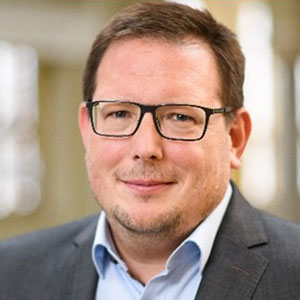 Florian Englmaier is a chaired Professor of Organizational Economics (W3) at LMU Munich. He is the director of the Center of Organizational Research and Evidence (CORE) at LMU and leads Predictive People Analytics, a knowledge hub for firms and academics working in human resource management. His research focuses primarily on organizational and personnel economics. In his research, he often cooperates with partner organizations and frequently uses field experiments to analyze and improve organizational performance.
After completing his studies at LMU Munich, he earned his PhD in 2005. His academic career includes significant international experience as postdoc and visiting scholar at, among others, the University College London, Harvard University, Stanford Graduate School of Business, MIT Sloan, and Northwestern University’s Kellogg School of Management. Prior to his current appointment in Munich, he held professorships at the Universities of Konstanz and Würzburg. He held various leading roles in the international and German research communities. He served on high-ranking DFG committees, was chairman of the German Organizational Economic Committee, served on the board of the German Economic Association and the Society of Institutional and Organizational Economics, is a Principal Investigator in the DFG-funded Collaborative Research Center (SFB) “Rationality and Competition,” and serves as an Associate Editor for Management Science. He is also a Research Fellow at the CEPR, IZA, and CESifo.
His research has been published in top-tier journals such as the Journal of Political Economy, Journal of the European Economic Association, The Economic Journal, and Management Science. Beyond his research, he provides policy advice and fostering the development of young researchers, serving as the director of the Master in Quantitative Economics graduate program.
Stefan Grimm
 Stefan Grimm is Associate Partner at the management consultancy 3con Management Consultants GmbH in Germany. He leads the unit on sustainable transformation and strategy consulting and advises firms mainly within the chemical and process industries, automotive and healthcare.
After studies in economics and finance in Tübingen, St. Gallen and Rotterdam, he completed his PhD in Behavioral and Experimental Economics at University of Munich in 2018. His research portfolio spans decision making under uncertainty, determinants of team performance, and discrimination and has been published among others in Journal of Political Economy, The Leadership Quarterly, and Experimental Economics. Since then, he has held leadership positions at Allianz and NOVENTI, and he has been with 3con Management Consultants since 2024.
Dominik Grothe
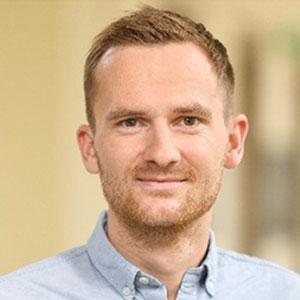 Dominik Grothe is a Postdoctoral Researcher and Head of Research at the Department of Economics at LMU Munich. He is also a Co-Founder and Managing Director of the Center for Organizational Research and Evidence (CORE) at LMU. His research focuses on organizational and personnel economics, with a particular emphasis on how incentives, leadership, and organizational design affect individual and team performance.
In his research, he frequently collaborates with partner organizations and uses field experiments to generate causal evidence in real-world organizational settings. His work aims to translate rigorous research into actionable insights for organizations, helping to improve leadership, team dynamics, and organizational performance.
David Schindler
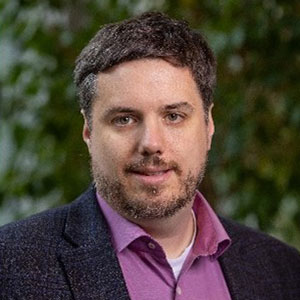 David Schindler is currently Associate Professor in the Economics department at Tilburg University, and he is a Research Fellow at CESifo. With his research, David seeks to understand how insights from behavioral economics influence behavior in questions of public policy, political economy, and firm organization. David works with secondary data as well as laboratory and field experiments.
Simeon Schudy
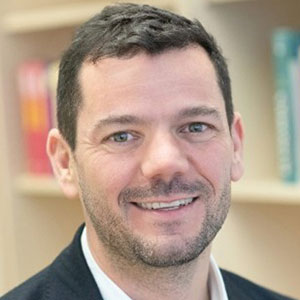 Simeon Schudy is a Professor of Applied Economics and Data Science at Ulm University and a Fellow of the CESifo Research Network. Prior to joining Ulm University in 2023, he was Professor of Behavioral and Experimental Economics at LMU Munich. His research lies at the intersection of behavioral and experimental economics, labor and organizational economics, and political economy.
A central theme of his current research is how technological change transforms work and social interactions, with a particular focus on communication, teamwork, leadership, incentives, and the formation of beliefs. Methodologically, he uses laboratory, online, and large-scale field experiments as well as survey, administrative, and company data to answer important questions from economics and management.
Simeon studied economics at the University of Konstanz, where he also earned his PhD (summa cum laude) in 2012. He subsequently worked as a postdoctoral researcher at the Thurgau Institute of Economics (TWI) before joining LMU Munich, where he held several positions between 2014 and 2023. He is a member of the Committees for Organizational Economics and Social Sciences of the German Economic Association, serves on the editorial board of The Leadership Quarterly, and chairs the Institutional Review Board at the Faculty of Mathematics and Economics at Ulm University.
His research has been published in leading general interest and top field journals including the Journal of Political Economy, Journal of Labor Economics, Management Science, Review of Financial Studies, Journal of Public Economics, Nature Human Behaviour, PNAS, European Economic Review, and The Leadership Quarterly. Beyond his research, he is a dedicated teacher, receiving teaching awards at LMU Munich and University of Konstanz. Further, he has consulted firms in the context of behavioral interventions.
Past Award Winners
2024: William G. Obenauer, Jost Sieweke, Nicolas Bastardoz, Paulo R. Arvate, Brooke A. Gazdag, & Tanja Hentschel
Are women strategic leaders more effective during a crisis than men strategic leaders? A causal analysis of the relationship between strategic leader gender and outcomes during the COVID-19 crisis
2023: Mladen Adamovic & Andreas Leibbrandt
Is there a glass ceiling for ethnic minorities to enter leadership positions? Evidence from a field experiment with over 12,000 job applications
2022: Nisvan Erkal, Lata Gangadharan, & Erte Xiao
Leadership selection: Can changing the default break the glass ceiling?
2021: Sebastian Fest, Ola Kvaloy, Petra Nieken, & Anja Schöttner
How (not) to motivate online workers: Two controlled field experiments on leadership in the gig economy
2021: George Banks, Thomas Fischer, Janaki Gooty, & George Stock
Ethical leadership: Mapping the terrain for concept cleanup and a future research agenda
2020: Stephanie M. Rizio & Ahmed Skali
How often do dictators have positive economic effects? Global evidence, 1858–2010
2019: Mats Alvesson & Katja Einola
Warning for excessive positivity: Authentic leadership and other traps in leadership studies
2018: Dr. Paulo Roberto Arvate
The Queen Bee: A myth? The effect of top-level female leadership on subordinate females
2017: Dr. Kristen Cullen-Lester
Incorporating social networks into leadership development: A conceptual model and evaluation of research and practice
2016: Dr. George C Banks
A meta-analytic review of authentic and transformational leadership: A test for redundancy
2015: Dr. Tiffany Keller Hansbrough
Reconsidering the accuracy of follower leadership ratings
2014: John Antonakis
Instrumental leadership: Measurement and extension of Transformational–transactional leadership theory
2013: Jan-Emmanuel De Neve
Born to lead? A twin design and genetic association study of leadership role occupancy
2012: Dr. Pierre Balthazard
Differentiating transformational and non-transformational leaders on the basis of neurological imaging
2011: David Day & Hock-Peng Sin
Longitudinal tests of an integrative model of leader development: Charting and understanding developmental trajectories
2010: John Antonakis
On making causal claims: A review and recommendations
2009: Dr. Dongil (Don) Jung
Moderating role of subordinates’ attitudes on transformational leadership and effectiveness: A multi-cultural and multi-level perspective
2008: Dr. Ginamarie Scott Ligon
Development of Outstanding Leadership: A Life Narrative Approach
2007: Dr. John J. Sosik
Relationships between leadership style and vision content: The moderating role of need for approval, self-monitoring, and need for social power
2006: Dr. Joyce Bono
Charisma, positive emotions and mood contagion
About The Leadership Quarterly
The Leadership Quarterly is a social-science journal dedicated to advancing our understanding of leadership as a phenomenon, how to study it, as well as its practical implications. The aim of the journal is to publish scholarly research, theory, and developmental application from diverse fields of inquiry about leadership. Learn more about The Leadership Quarterly.


At the Center for Creative Leadership, our drive to create a ripple effect of positive change underpins everything we do. For 50+ years, we’ve pioneered leadership development solutions for leaders at every level, from community leaders to CEOs. Consistently ranked among the top global providers of executive education, our research-based programs and solutions inspire individuals at every level in organizations across the world — including 2/3 of the Fortune 1000 — to ignite remarkable transformations.
At the Center for Creative Leadership, our drive to create a ripple effect of positive change underpins everything we do. For 50+ years, we’ve pioneered leadership development solutions for leaders at every level, from community leaders to CEOs. Consistently ranked among the top global providers of executive education, our research-based programs and solutions inspire individuals at every level in organizations across the world — including 2/3 of the Fortune 1000 — to ignite remarkable transformations.
Get our latest insights delivered to your inbox: ccl.org/subscribe.